For years I could talk about the cloud without really understanding it. I could explain the benefits, scope a solution, hold my own in a discovery call. But if you’d asked me what actually happens when someone loads a website, or what the real difference between a few core AWS services is, I’d have gotten vague fast.
A while back I decided to fix that, quietly, on my own time. The thing that made it possible was having AI to learn with.
A tutor that never sighs
I treated it like a patient tutor who never made me feel slow. “Explain this like I don’t have an engineering background.” “What does that word actually mean?” “Why would anyone pick this over that?” These are the basic questions I’d never ask in a work setting, and I could ask them as many times as I needed until it clicked. That alone changed how approachable the whole thing felt.
The mental model that formed
Bit by bit, a picture came together. Not deep expertise, but a real working sense of how the pieces fit:
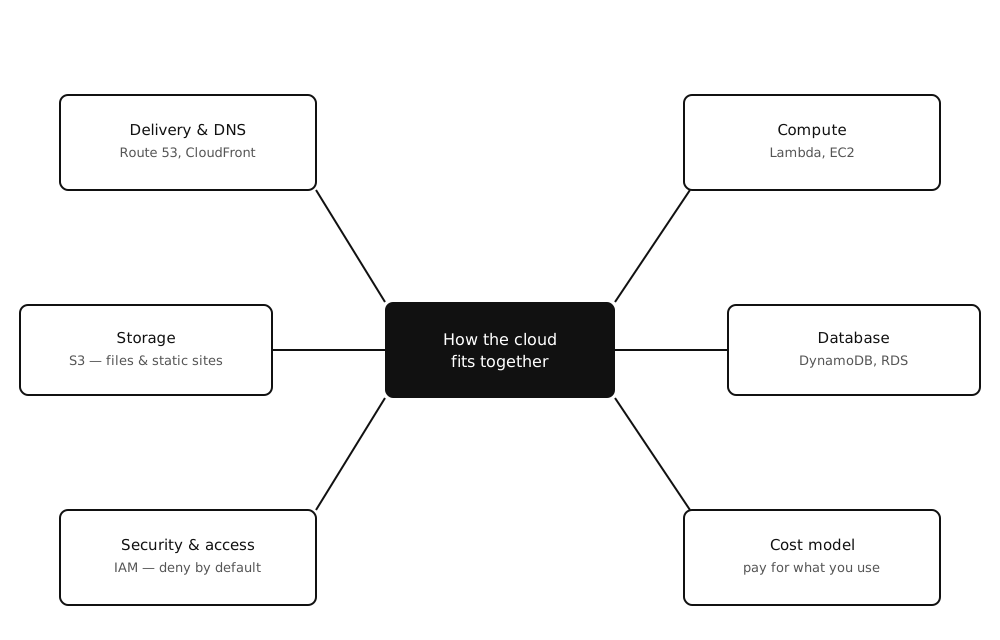
- Some services are about where code runs, some about where things are stored, some about where data lives. Different jobs, mixed and matched.
- A simple web app is really just a request finding its way: from a person, through DNS and a content network, to wherever the page and the data sit.
- “Regions” and “availability zones” stopped being noise. I get why one region keeps showing up in every tutorial now.
- Security isn’t a bolt-on. The idea that everything is denied until you explicitly allow it reframed how I think about access entirely.
- Pay-for-what-you-use stopped being a sales line and became something I actually understand.
Here’s roughly the map in my head these days:
What this is, and what it isn’t
I want to be honest about the line. I understand how these things fit together. I haven’t built them yet. Knowing how an engine works and being able to build one are different skills, and I’m not going to pretend otherwise. But understanding was the first wall, and getting over it is what made building feel like something I’m actually allowed to attempt.
It already changed my work
I follow technical conversations now instead of nodding along. My questions in discovery are sharper. I can usually tell when something is genuinely hard versus when it just sounds hard. For someone whose job is translating between customers and technical teams, that’s not a small thing.
AI didn’t make me an engineer. It made the door open enough to walk through. The harder step, actually building something, is next.